

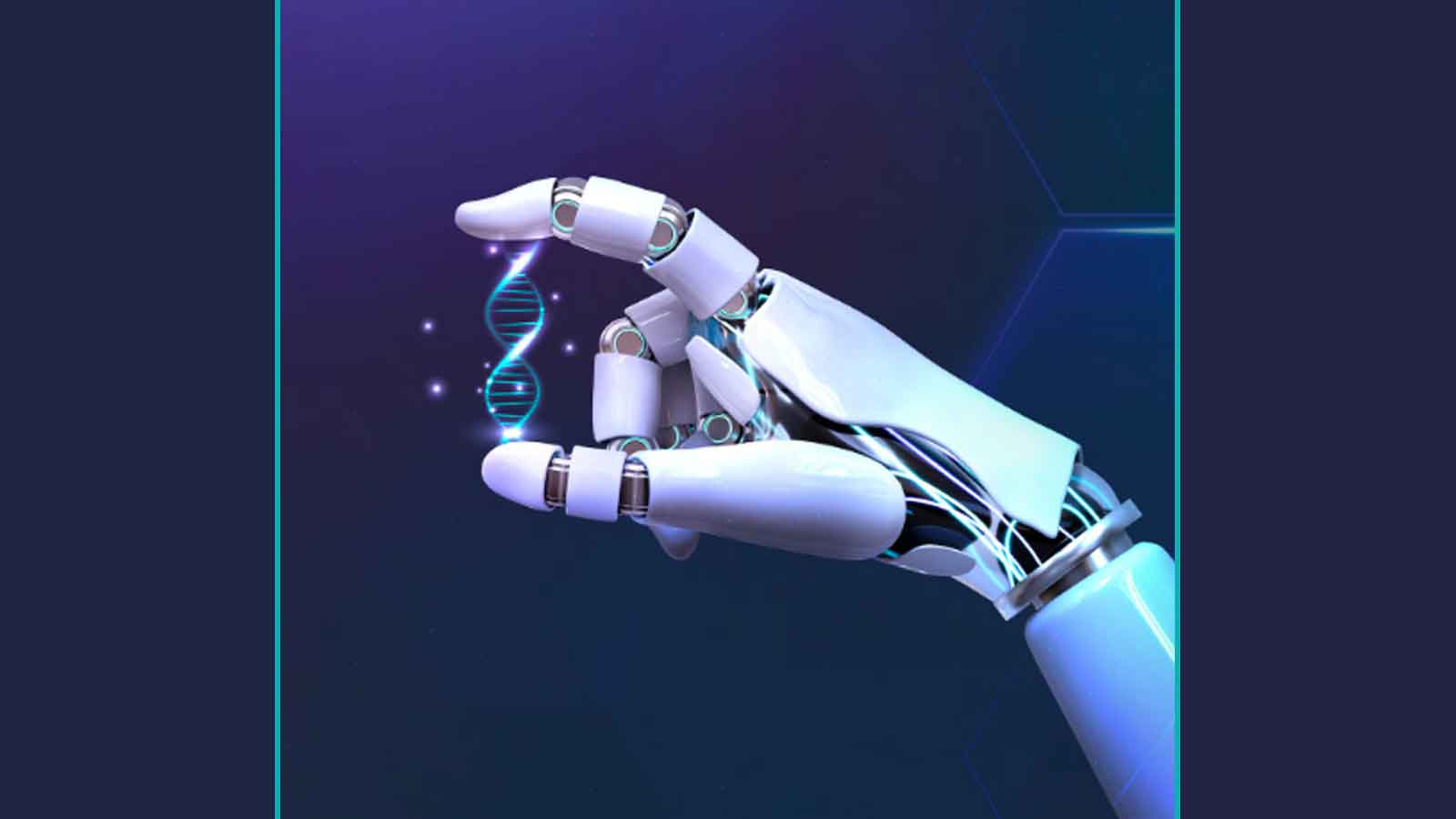

What folks take into consideration synthetic intelligence has principally been what they see on a display for the previous few years. AI can compose phrases, make graphics, summarize paperwork, and write code. These abilities are superb, however all of them have one factor in widespread: they’re all digital. Most discussions about AI are nonetheless restricted to pixels, prompts, and productiveness positive factors. This makes it appear to be intelligence is simply one thing that provides out info as an alternative of one thing that adjustments the bodily world.
This framing on the display makes issues slightly more durable. When AI is usually judged on how successfully it talks, designs, or predicts in silico, its value relies on how straightforward and environment friendly it’s, not how a lot it adjustments issues. You possibly can rewrite textual content, create new graphics, and modify code once more and over once more, however the fundamental fact stays the identical. The result’s an AI story that focuses on serving to folks fairly than giving them energy—instruments that assist folks assume sooner however don’t often do something outdoors of software program.
A brand new frontier is presently rising that challenges this restriction. Molecular AI is a transfer away from digital abstraction and towards direct interplay with the actual world. Such a AI mannequin works with chemical substances, proteins, and supplies as an alternative of creating phrases or photos. It makes plans for buildings that may be made, examined, and utilized in the actual world. The output is not a file or a dashboard; it’s now a molecule, a cloth, or a organic perform that wasn’t there earlier than.
This modification is a part of an even bigger change in how intelligence is used. The objective of molecular AI is not only to elucidate or forecast the surroundings, however to vary it. Fashions imitate chemical reactions, look into how proteins fold, and check the qualities of supplies on a scale that no human lab might attain. By doing this, they flip a long time of trial-and-error experimentation into days and even hours, which adjustments what scientific improvement seems like at its core.
The primary change on this development goes from making info to creating matter. Data will help you make choices, however matter adjustments the outcomes. A novel protein can cease a illness from spreading. A brand new materials could make batteries stronger, lighter, or work higher. Molecular AI makes computation a type of utilized physics and biology, the place algorithms construct actual issues as an alternative of simply speaking about them.
This modification additionally adjustments what AI does. Molecular AI not works as an assistant that helps folks be artistic or analyze issues. As a substitute, it turns into a scientific actor that comes up with concepts, seems for doable options, and offers candidates which can be appropriate for bodily testing. As a substitute of exploring via large design areas by hand, folks now supervise, examine, and instruct clever techniques that may do it on their very own.
As AI evolves past chatbots and screens, its actual results may be seen not in discussions, however in c****, supplies, and applied sciences that change industries and make folks’s lives higher. The appearance of molecular AI marks the beginning of a brand new period during which AI is not outlined by what it says, however by what it makes
In-Silico Evolution: 10,000 Years in 24 Hours
In silico evolution compresses 1000’s of years of pure trial and error into a brief period of time. AI examines facets that biology and chemistry can not obtain on their very own by mimicking molecular variation, choice, and optimization on an enormous scale.
Previously, it took 10,000 years of evolution to make one thing. Now, you possibly can design, check, and enhance all of it in in the future.
From Actual-Life Labs to Digital Experiments
The velocity of bodily experimentation has restricted scientific discoveries for a whole bunch of years. It’s a linear course of to develop hypotheses, collect supplies, conduct checks, and observe the outcomes. Even with automation, the time it takes to do issues in a conventional lab may be years and even a long time. In-silico experimentation will get round this drawback by shifting discoveries to laptop settings, the place experiments may be simulated as an alternative of getting to be accomplished in actual life.
In moist labs, every iteration takes time and assets, however in digital settings, checks can happen on the similar time. That is the place molecular AI makes a giant distinction: it converts experimentation from a sluggish, step-by-step process into one that may be accomplished on an enormous scale.
How Evolution in Silico Works?
In-silico evolution is like pure evolution, nevertheless it doesn’t have the largest restrict: time. Over 1000’s or thousands and thousands of years, organic evolution will depend on random adjustments and decisions. Molecular AI digitally recreates this course of by making large teams of molecular candidates, testing them in opposition to set efficiency requirements, after which bettering them again and again.
Scientists can direct evolution towards sure objectives, equivalent to binding energy, stability, effectivity, or sturdiness, as an alternative of ready for nature to search out one of the best solutions by itself. The result is directed evolution on the velocity of computing.
-
Simulating Proteins, Molecules, and Interactions
Among the best issues about molecular AI is that it may possibly mannequin how proteins fold and the way molecules work together. Proteins get their jobs accomplished by having sophisticated three-dimensional shapes, and determining what these shapes are has at all times been one among biology’s hardest issues. AI fashions can now determine how proteins fold, how secure they’re, and the way they work together with different molecules.
AI techniques can do extra than simply mannequin proteins. They’ll additionally mannequin chemical reactions, simulate how compounds work together with targets, and research how molecules reply in various conditions. This lets scientists have a look at large chemical and organic design areas with out having to make every candidate in individual.
-
Placing Centuries into Days
Time compression is essentially the most disruptive impact of molecular AI. Issues that used to take centuries of trial and error in evolution can now be seemed into in a matter of hours or days. Drug discovery pipelines that used to take 10 years may be lower down loads by eliminating unhealthy candidates early on. Materials discovery cycles can keep away from years of guesswork by beginning with designs which have already been improved as an alternative of uncooked checks.
This compression doesn’t do away with bodily testing; it makes it smarter. Solely one of the best candidates come out of the simulation, which cuts down on prices, failure charges, and wasted time within the lab.
Why Velocity Modifications the Nature of Science?
Velocity isn’t only a strategy to get issues accomplished sooner; it additionally influences what science is keen to do. When experiments take a very long time and value some huge cash, researchers must watch out. They make hypotheses extra particular, scale back the variety of variables, and keep away from notions that might be harmful. With molecular AI, exploration is simple and low-cost.
Scientists might shortly check out loopy concepts, look into uncommon molecular buildings, and make adjustments. The design area will get greater, creativity grows, and discovery occurs sooner. This radically alters the tradition of analysis, transitioning from prudent validation to audacious discovery.
People and AI as Companions in Evolution
On this new method of doing issues, individuals are nonetheless concerned. As a substitute, their job adjustments. Researchers set objectives, limits, and ethical bounds, whereas molecular AI does large-scale analysis and optimization. Individuals then examine the outcomes, make sense of them, and select which paths to observe.
In-silico evolution signifies a transition from gradual discovery to perpetual design. Molecular AI permits science to work on evolutionary scales with out evolutionary delays by shrinking time and growing chance. This opens up new achievements that have been beforehand constrained not by creativeness, however by time itself.
From In-Silico to In-Vivo: When Simulation Turns into Actuality
For many years, scientific discovery has been break up between the pc world and the actual world of the lab. Simulations may present what may occur, however actual proof required trials that took a very long time, price some huge cash, and have been prone to fail.
That line is now fading away. Molecular AI is making the transition from in-silico design to in-vivo testing smoother, sooner, and extra dependable. That is altering how novel molecules go from thought to actuality.
Bridging Digital Design and Organic Validation
The primary achievement of molecular AI is that it may possibly mimic organic and chemical processes with a degree of accuracy that has by no means been seen earlier than. Fashionable AI techniques be taught immediately from large databases of chemical buildings, interactions, and experimental outcomes as an alternative of contemplating simulations as imprecise estimates. This makes it simpler for digital designs to match how molecules act in actual organic settings.
So, going from digital design to bodily testing is not a leap of religion. Scientists can now transfer into moist labs with extra confidence {that a} molecule will bind as anticipated, fold accurately, or present the precise organic exercise. Molecular AI is sort of a translator; it turns computer-based concepts into concepts that may be examined within the lab.
AI-Designed Molecules Enter the Bodily World
The truth that AI-designed proteins, enzymes, and medicines at the moment are being examined in the actual world makes this alteration real. Biotech and pharmaceutical corporations are making, expressing, and testing proteins that have been utterly designed in silico. These molecules aren’t simply small adjustments; they’re sometimes new buildings that people would have a tough time arising with.
Molecular AI techniques can counsel proteins which can be optimized for stability, specificity, or manufacturability, and so they may predict how these proteins will behave inside residing cells. This talent is dashing up improvement in fields like enzyme engineering, antibody creation, and focused therapies, the place success or failure will depend on molecular-level accuracy.
Fewer Failures By Higher Upfront Prediction
Probably the most essential results of molecular AI is not only velocity, but in addition a giant drop in downstream failure. Drug discovery and molecular R&D have traditionally excessive attrition charges, with many compounds failing late in improvement after years of labor. Poor binding, unanticipated toxicity, or instability usually solely present up after lots of testing.
Molecular AI screens out weak candidates earlier than they ever get to costly lab work by making predictions extra correct from the start. Digital screening checks thousands and thousands of molecular variants in opposition to many alternative limits on the similar time and solely picks those which can be almost certainly to work. The result’s a extra streamlined and efficient experimental pipeline with fewer useless ends.
Altering the R&D Funnel in Biotech and Pharma
This means to foresee is altering the entire R&D funnel. As a substitute of beginning with a variety of hypothesis-driven analysis and narrowing down slowly, corporations can begin with extremely optimized molecular potentialities straight away. The funnel flips over: in depth inquiry occurs on a pc, whereas tactile experimentation focuses on a narrower, higher set of options.
This impacts how groups in biotech and pharma divide up their assets. There are fewer experiments wanted to get helpful outcomes, timetables are shorter, and capital is used extra effectively. Molecular AI lets R&D groups attempt to attain greater scientific objectives as a result of they know that simulation has already lowered the danger of doing so early on.
Danger Discount, Not Simply Acceleration
Lots of people are keen on velocity, however the actual advantage of molecular AI is in managing threat. AI lowers the possibilities of surprises in a while by bearing in mind organic limits, security issues, and manufacturability in early designs. That is particularly essential in corporations which can be regulated, as a result of errors can result in not solely monetary losses but in addition moral and affected person questions of safety.
Molecular AI doesn’t do away with uncertainty; as an alternative, it strikes it ahead, the place it’s cheaper and safer to cope with. On this method, it adjustments the definition of innovation from a dangerous wager to a deliberate, data-driven course of.
Molecular AI is popping digital concepts into real-world breakthroughs when simulation and actuality come collectively. The lab is not the place new concepts are found; it’s fairly the place ideas which have already been examined in silico are confirmed. It is a main shift in how science strikes ahead.
Materials Science 2.0: The Finish of “Guess and Verify”
For nearly 100 years, materials science has grown via a painstaking, hands-on methodology. Scientists observed a necessity, got here up with a speculation, made a cloth, examined it, failed, modified it, and tried once more. This “guess and examine” loop has at all times been restricted by time, cash, and human instinct, even when it has led to very large development.
Even the best efficient improvements usually occurred accidentally, after they have been discovered as an alternative of being deliberate.
That mind-set is falling aside right now. Molecular AI is altering materials science from a area of research to an engineering area. Researchers can now inform AI manufacture a cloth as an alternative of guessing which molecules might work.
The Limits of Conventional Supplies Discovery
Bodily experimentation has traditionally impeded materials discovery. In a lab setting, every iteration must be put collectively, examined, and confirmed. This makes the search area very small. There are virtually an countless variety of ways in which atoms and molecules can mix, however folks can solely have a look at a tiny portion of them.
Due to this, quite a few materials qualities, such conductivity, sturdiness, flexibility, and power density, have been improved little by little as an alternative of being utterly rethought. Breakthroughs generally relied on likelihood, institutional reminiscence, or the rare instinct of a unprecedented scientist. There was actual progress, nevertheless it was sluggish.
Molecular AI will get round this restrict by making the search area greater than what people can deal with. It doesn’t check lots of choices; as an alternative, it makes use of computer systems to have a look at thousands and thousands or billions of chemical potentialities earlier than doing a single bodily experiment.
-
AI-Pushed Inverse Design: Outcomes First, Molecules Second
Inverse design is crucial change that molecular AI has made doable. In conventional science, the primary query is, “What does a molecule do?” Inverse design turns that logic round. Scientists now start by specifying the specified final result—energy, conductivity, biodegradability, thermal resistance—and inquire of AI, “What molecular construction accomplishes this?”
This modification is groundbreaking. AI fashions don’t undergo chemistry step-by-step. As a substitute, they mimic chemical interactions on a big scale, guessing how completely different preparations will function in the actual world. The system runs via cycles by itself, getting nearer to a objective property every time.
It used to take years of trial and error to search out the precise settings, however now it simply takes just a few days to restrict it down to a couple high-probability choices. Molecular AI adjustments the method of discovering new supplies from a voyage of exploration to a problem of optimization.
-
Designing Polymers, Batteries, Catalysts, and Semiconductors
Molecular AI is already having an impact on essential sectors. AI fashions in polymer science are making supplies with the right combination of flexibility, energy, and biodegradability. This can result in higher packaging, medical gadgets, and polymers which can be good for the surroundings.
Molecular AI is dashing up battery analysis in power storage by discovering electrolyte compositions and electrode supplies that make batteries maintain extra power, cost sooner, and keep secure at excessive temperatures. Researchers might now simulate efficiency tradeoffs earlier than spending some huge cash on prototyping as an alternative of blindly iterating.
One other space that’s altering is the invention of catalysts. In chemical trade, farming, and sustainable power, catalysts make reactions occur. Molecular AI fashions can determine how reactions will occur, make catalysts work higher, and lower down on the necessity for uncommon or harmful elements.
Persons are even arising with new methods to make use of semiconductor supplies, which have at all times been restricted by strict bodily guidelines. AI-driven simulations are trying into new compounds that work higher, use much less energy, and do away with warmth higher. This can change the way forward for laptop {hardware} itself.
Additionally Learn: AIThority Interview with Rob Bearden, CEO and Co-founder at Sema4.ai
A Structural Shift, Not an Incremental Enchancment
It’s straightforward to consider molecular AI as only a speedier device. That might be a nasty thought. This isn’t about getting the identical job accomplished sooner; it’s about redefining what’s doable.
Human cognition and laboratory throughput restrict conventional materials science. Molecular AI takes away each of those constraints. It brings in a complete new method of discovering issues, the place investigation is completed via computer systems, in parallel, and with an opportunity of success.
It is a huge change in how new concepts come about. Trial and error not works to search out supplies. They’re designed to be the outcomes of an optimization system. As a substitute of verifying each principle by hand, the scientist’s job adjustments from explorer to system architect. They set objectives, limits, and standards for validation.
-
Supplies as Engineered Outputs, Not Accidents
On this new mind-set, supplies aren’t blissful accidents. They’re designs on function. With molecular AI, corporations might regard the qualities of supplies as information as an alternative of hopes.
This has huge results on the economic system. The time it takes to develop one thing will get shorter. The variety of failures goes down. The effectivity of capital goes up. When created first with computer systems, complete lessons of supplies that have been as soon as regarded as too costly or sophisticated to make use of grow to be doable.
As this methodology will get higher, corporations that may absolutely combine molecular AI into their R&D processes may have the higher hand over people who solely use it as an experimental add-on.
The CIO as a “Co-Scientist”
The Chief Data Officer is an surprising key to the success of molecular AI because it advances from analysis labs to large-scale enterprise use. It was only a scientific drawback, however right now it’s additionally an organizational and infrastructural one.
Molecular AI isn’t solely about algorithms; it additionally wants compute, information, integration, and governance. These are areas the place CIOs already work on a big foundation.
-
Molecular AI as a Enterprise Drawback
To run molecular AI techniques, you want lots of computing energy, high-quality datasets, and well-planned pathways between simulation and testing. One research crew can’t do that on their very own.
Firms that use molecular AI must coordinate their cloud infrastructure, high-performance computing (HPC), mannequin coaching pipelines, and information storage buildings. In addition they want to attach the outcomes of AI with laboratory execution techniques and the manufacturing processes that come after them.
This strikes molecular AI from being a specialised analysis device to a fundamental enterprise platform, placing CIOs accountable for scientific progress.
-
Compute, Knowledge Pipelines, and Simulation Infrastructure
CIOs at the moment are accountable for the digital spine that makes molecular AI work. This consists of distributing compute energy between cloud and on-premise HPC clusters, dealing with simulation workloads, and ensuring that information flows easily between techniques.
The standard of the info is essential. The molecular datasets that AI fashions soak up are what make them good. CIOs must be sure that information is simple to search out, versioned, and accessible by groups and other people in numerous elements of the world.
The infrastructure for simulation should additionally be capable of develop and alter. Molecular AI workloads are heavy on computing energy and are available in bursts, so useful resource administration must be versatile to search out the precise steadiness between price and efficiency.
-
The place Cloud, HPC, AI, and Moist Labs Come Collectively
Its hybrid nature is likely one of the issues that makes molecular AI distinctive. It’s within the center between digital and bodily techniques. AI creates molecular designs in silico, that are subsequently made and examined in moist labs. This offers the fashions new information that they might use to enhance.
This closed loop must work collectively completely. CIOs must be sure that AI platforms, laboratory info administration techniques (LIMS), robotics, and analytics instruments can all work collectively. Any issues on this cycle decelerate new concepts.
In impact, the CIO turns into a co-scientist. They don’t seem to be accountable for the theories themselves, however of the mechanisms that make it possible for science to vary shortly and reliably.
-
Governance, Reproducibility, and Auditability
Governance is essential as molecular AI begins to have an effect on essential decisions, equivalent to drugs prospects, supplies for essential infrastructure, and power techniques. Firms want to have the ability to clarify how a molecular design was produced, what information went into it, and why some decisions have been taken.
CIOs are crucial for making issues audit-able and reproducible. This implies maintaining observe of issues like mannequin variations, simulation parameters, coaching information, and experimental outcomes. Molecular AI might grow to be a darkish field with out this degree of rigor, which might damage belief and compliance with the legislation.
Governance frameworks make making certain that choices made by AI about molecules may be checked out, checked, and refined over time.
The Progress of Blended Scientific Groups
Lastly, molecular AI is altering how organizations are arrange. Breakthroughs don’t occur in only one area anymore. They arrive from combined groups of knowledge scientists, chemists, biologists, supplies engineers, and IT architects.
These teams want to make use of the identical platforms, communicate the identical languages, and have the identical objectives. By ensuring that applied sciences, information entry, and workflows are the identical throughout capabilities, CIOs help make this collaboration doable.
Molecular AI Does Greatest In Ecosystems, Not In Silos
Materials Science 2.0 just isn’t an idea for the longer term; it’s already taking place. Molecular AI is altering the best way supplies are made, improved, and utilized by changing trial-and-error experimentation with AI-driven design. On the similar time, it’s bringing enterprise leaders, notably CIOs, into the scientific course of.
On this new age, laboratory velocity and human instinct not constrain creativity. The one factor that limits it’s how effectively organizations construct, run, and develop the mechanisms that make molecular AI work.
Financial and Strategic Penalties
Molecular AI just isn’t solely a scientific accomplishment; it is usually a turning second within the economic system and world politics. AI is altering the best way worth is made, secured, and contended over because it goes past making digital issues to designing actual issues. The consequences go far past labs and into enterprise technique, nationwide safety, and international provide chains.
Molecular AI is turning into what software program was to the digital economic system.
Mental Property Is Shifting from Patents to Fashions and Datasets
Patents have been the primary strategy to defend mental property in analysis and engineering for a very long time. A molecule, a cloth composition, or a producing course of might be revealed, recorded, and guarded by legislation. However Molecular AI adjustments the entire foundation of this method.
When fashions skilled on proprietary datasets make issues precious, essentially the most precious factor is not only one invention; it’s the system that may make 1000’s of helpful innovations on command. The aggressive benefit adjustments from having management over outcomes to having management over means.
Datasets that file molecular interactions, simulation outcomes, and experimental suggestions loops rework into strategic belongings. The fashions skilled on them are like years of scientific data became algorithms. These belongings will not be like patents since they’re exhausting to reverse engineer, exhausting to see via, and at all times getting higher.
Mental property is not static on this new system. Firms compete on how briskly their fashions be taught, adapt, and do higher—not on what number of particular person discoveries they hold secret.
Aggressive Benefit By Molecular Design Velocity
Velocity has at all times been essential for innovation, however Molecular AI transforms what velocity means. It’s not about greater analysis groups or speedier labs anymore. It’s about molecular design velocity, which implies with the ability to shortly check, enhance, and select candidates on a pc scale.
Firms who use Molecular AI effectively can look into orders of magnitude extra choices than their rivals. They’ll check concepts virtually quickly, throw out failures straight away, and solely move essentially the most promising candidates on to bodily validation.
This cuts down on the time it takes to make merchandise by loads. It used to take years for brand new supplies, prescribed drugs, or power options to go from thought to prototype. Now it simply takes months. In fields the place time-to-market is crucial think about management, this velocity turns into crucial.
Extra important, velocity builds up. Each experiment sends new info again into the system, which makes it work higher sooner or later. Leaders get forward over time, not as a result of they work more durable, however as a result of their techniques be taught sooner.
Implications for Nationwide Safety and the Provide Chain
Molecular AI has strategic results that transcend enterprise competitors and into nationwide safety. Supplies are the premise for all the things, from medical provide networks and semiconductors to protection techniques and power infrastructure. Having the ability to design and enhance these supplies in a single’s personal nation is a query of sovereignty.
International locations which have management over Molecular AI can get higher armor, batteries, sensors, and supplies that may stand up to harsh circumstances. Alternatively, counting on supplies designed in different international locations makes issues extra susceptible.
The resilience of the provision chain additionally varies. International locations and companies can make use of Molecular AI to make options, enhance industrial processes, or transfer manufacturing to locations the place engineered supplies can be found as an alternative of counting on restricted pure assets or weak international networks. On this case, Molecular AI is not only a strategy to give you new concepts, but in addition a strategy to defend in opposition to disruption.
Molecular AI: A Strategic Asset, Not a Analysis Instrument
These adjustments make Molecular AI greater than only a lab device; they make it a boardroom situation. It turns into a strategic asset, like information infrastructure, industrial capability, or mental capital.
Firms who see Molecular AI as a aspect challenge might fall behind people who make it part of their fundamental technique. Increasingly, choices on investments, governance, partnerships, and expertise depend upon how effectively Molecular AI is used and saved protected.
The individuals who win the following industrial age gained’t solely discover higher supplies. They’ll personal the techniques that make them.
Moral and Organic Boundaries
Molecular AI quickens each discovery and threat. The identical abilities that make it doable to make medication that save lives and supplies that final can be employed incorrectly, misunderstood, or with out sufficient supervision. This brings up essential ethical issues that may’t wait.
Innovation on the molecular degree requires accountability on the institutional degree.
Dangers of Accelerating Organic Experimentation
Probably the most essential adjustments that Molecular AI has made is to hurry up organic experiments. AI makes it simpler to discover by mimicking and optimizing organic techniques on a pc.
This makes issues way more environment friendly, nevertheless it additionally makes it simpler for folks to get in. Capabilities that have been as soon as solely out there in high labs at the moment are simpler to get to, which raises the hazard of dangerous or poorly managed experiments.
When techniques transfer swiftly, errors unfold extra shortly. A mannequin can have a mistaken assumption that goes undetected for 1000’s of simulations. With out strict testing, Molecular AI might make issues worse as an alternative of fixing them.
In biology, velocity may be each a very good factor and a nasty factor.
Twin-Use Issues and Unintended Penalties
Molecular AI is basically dual-use. The identical strategies which can be used to make therapeutic proteins can be employed to make detrimental substances stronger. Weapons techniques can be made stronger through the use of the identical optimization strategies that make supplies stronger.
This dualism makes it more durable to manipulate. It’s exhausting to determine what somebody meant by code or fashions. A impartial algorithm may need good or unhealthy results, relying on how it’s used.
There are additionally worries about unintended outcomes. Organic techniques are sophisticated and work collectively. Designing a chemical to maximise one final result might inadvertently produce unintended penalties in different domains—environmental, ecological, or physiological.
Molecular AI doesn’t do away with ambiguity; it simply strikes it to a distinct place.
The Want for International Norms, Guardrails, and Oversight
Due to these hazards, guardrails are fairly essential. Firms that use Molecular AI must arrange techniques for oversight that embrace each technological controls and moral opinions. Governance buildings as sturdy as these utilized in finance or healthcare are wanted for mannequin entry, dataset use, and experimental pathways.
To set requirements for acceptable use on a worldwide scale, norms and agreements will probably be wanted. AI-driven molecular design wants international requirements, very like nuclear and organic analysis wanted worldwide cooperation.
This doesn’t imply stopping progress. It requires ensuring that individuals are held accountable for his or her actions whereas additionally encouraging new concepts.
Accountable Innovation within the Age of AI-Designed Life
The primary query of Molecular AI just isn’t if it ought to exist, however the way it needs to be managed. The flexibility to create matter—and possibly even life—comes with duties that transcend creating wealth or serving to your nation.
Accountable innovation necessitates transparency, interdisciplinary supervision, and a readiness to decelerate when required. It necessitates acknowledging that not all designs needs to be applied with out cautious consideration.
Molecular AI is likely one of the strongest applied sciences that individuals have ever made. How effectively it’s regulated will decide whether or not it turns into a pressure for therapeutic and resilience or a reason behind instability.
Molecular AI has lots of results on the economic system and technique. It adjustments the best way mental property works, what it means to have a aggressive edge, and the steadiness of energy on the planet. It additionally brings up ethical issues that may’t be answered by know-how alone.
As Molecular AI advances from labs to companies and society, its success will depend upon extra than simply what it makes. It’ll additionally depend upon how responsibly know-how is used.
Remaining Ideas
The emergence of molecular AI marks the start of a molecular renaissance—one outlined much less by sudden upheaval and extra by a deep reorientation of how science creates worth. In contrast to previous technological revolutions that changed human labor or digitized present processes, this second represents a return to first ideas.
It’s not about disruption for its personal sake, however about elevating scientific intent. The instruments have modified, however the ambition is timeless: to grasp the bodily world effectively sufficient to form it intentionally.
For many of recent historical past, science superior via commentary, inference, and gradual experimentation. Progress relied on what might be examined, measured, and repeated throughout the constraints of time and assets.
Immediately, molecular AI permits a decisive shift from observing nature to actively designing inside it. Molecules, supplies, and organic techniques are not handled as mysteries to be uncovered one experiment at a time. They’re turning into design areas—huge, navigable, and optimizable—the place desired outcomes may be specified first and constructed with precision.
This transition is laying the inspiration for a brand new bodily economic system. Simply as software program reshaped the digital world, molecular AI is reshaping the fabric one. Power storage, prescribed drugs, manufacturing, and local weather resilience are being reimagined on the molecular degree.
Innovation is not constrained by shortage of trial-and-error experimentation, however accelerated by computational exploration and clever synthesis. Worth creation shifts from extraction and iteration to design and intent, with molecules themselves turning into programmable belongings.
What makes this renaissance distinct is how impression will probably be measured. The success of molecular AI won’t be counted in engagement metrics, productiveness dashboards, or digital impressions. It is going to be measured in tangible outcomes: c**** that attain sufferers sooner, supplies that stand up to excessive environments, batteries that allow sustainable infrastructure, and organic techniques that improve resilience fairly than pressure it. These are enduring contributions—bodily artifacts that change lives and societies in methods no interface ever might.
In 2026, essentially the most precious output of an AI won’t be a PDF report or a generated picture—however a bodily materials, a novel molecule, or a organic treatment that basically adjustments the world.
Additionally Learn: The Finish Of Serendipity: What Occurs When AI Predicts Each Selection?
[To share your insights with us, please write to psen@itechseries.com]
