

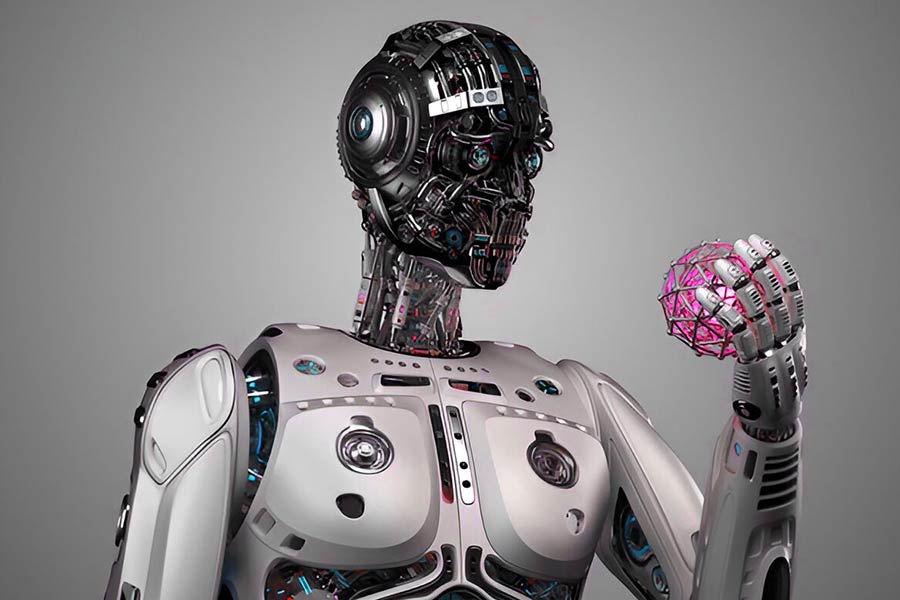

World Objects, Inc. (GO), a spatial intelligence firm digitizing the bodily world, introduced a multi-year strategic collaboration with Microsoft to construct a retrieval-grounded generative AI world mannequin on Microsoft Azure educated on actual, multimodally scanned, licensed bodily, 3D objects, generative AI world mannequin quite than internet-scraped video. This system will scale to an preliminary seed corpus of 1.67 million distinctive licensed objects. As a part of the collaboration, GO Scout, the primary product within the World Objects ecosystem, is now out there within the Microsoft Market, with extra merchandise to comply with.
Additionally Learn: AiThority Interview with Matej Bukovinski, Chief Know-how Officer at Nutrient
Strategic Microsoft Collaboration Will Construct Retrieval-Grounded Generative AI World Mannequin Skilled on Actual, Licensed, Bodily 3D Objects
The most important bottleneck in Bodily AI right this moment just isn’t compute, it’s knowledge. The verified, physics-accurate floor reality that lets robots, autonomous programs, and industrial AI carry out reliably in the actual world is scarce and infrequently licensed for industrial use. World Objects is constructing the substrate that closes that hole, and the ecosystem of merchandise that places it to work.
“At present’s generative programs hallucinate physics from pixels. We’re constructing the alternative: a world mannequin educated on actual objects measured, scanned inside and outside, and licensed on the supply,” stated Jess Loren, Co-Founder and CEO of World Objects. “Floor geometry is simply the outer shell. To offer AI a real understanding of an object, you want its mass, its articulation, the way it deforms beneath drive, what it appears like when it falls. With Microsoft Azure as the inspiration, we’ll make grounded spatial intelligence as accessible as a language mannequin and the GO ecosystem is how we put it into clients’ arms.”
A Multimodal Substrate for Bodily AI
Every object within the GO corpus is captured throughout the modalities that matter to a downstream AI system:
- Geometry and supplies — Excessive-resolution photogrammetric scans and PBR materials maps.
- Inner construction — CT scan knowledge revealing what’s inside the article, not simply its floor.
- Mass and physics — Measured weight, density, articulation, friction, and deformation habits.
- Acoustic and thermal — How an object sounds when struck or moved, and the way it conducts warmth.
A public preview of the GO Bodily Artifact Corpus (GO-PAC) is accessible at globalobjects.com.
What the Collaboration Delivers
- Multimodal corpus and generative world mannequin on Azure — bodily correct, IP-clean, and auditable by development.
- GO Scout within the Microsoft Market — the primary product within the World Objects ecosystem, out there now for enterprise procurement.
- Azure-native spatial intelligence companies — 3D scene reconstruction, sensor-fused world fashions, and physics-validated coaching knowledge on Azure.
- Joint go-to-market — co-developed reference options and gross sales motions throughout media and leisure, robotics and bodily AI, industrial digital twins, retail and client items, and automotive.
- Accountable AI provenance — full knowledge lineage from bodily object seize by means of mannequin output, aligned with Microsoft’s Accountable AI framework.
“Entry to World Objects physical-world knowledge provides Microsoft Azure clients a decisive benefit with Bodily AI. It connects AI to actuality, so insights mirror how infrastructure, provide chains, and even film units truly behave, not simply how fashions predict they could,” stated Alistair Speirs, Common Supervisor, World Platforms at Microsoft. “By way of our collaboration with World Objects, Azure clients acquire entry to verifiable, high-quality datasets grounded in the actual world, to allow them to put Bodily AI to work with the safety, scale, and belief wanted to remodel their industries.”
Additionally Learn: AI programs – Interoperable AI programs: Connecting fashions throughout platforms
[To share your insights with us, please write to psen@itechseries.com]
