

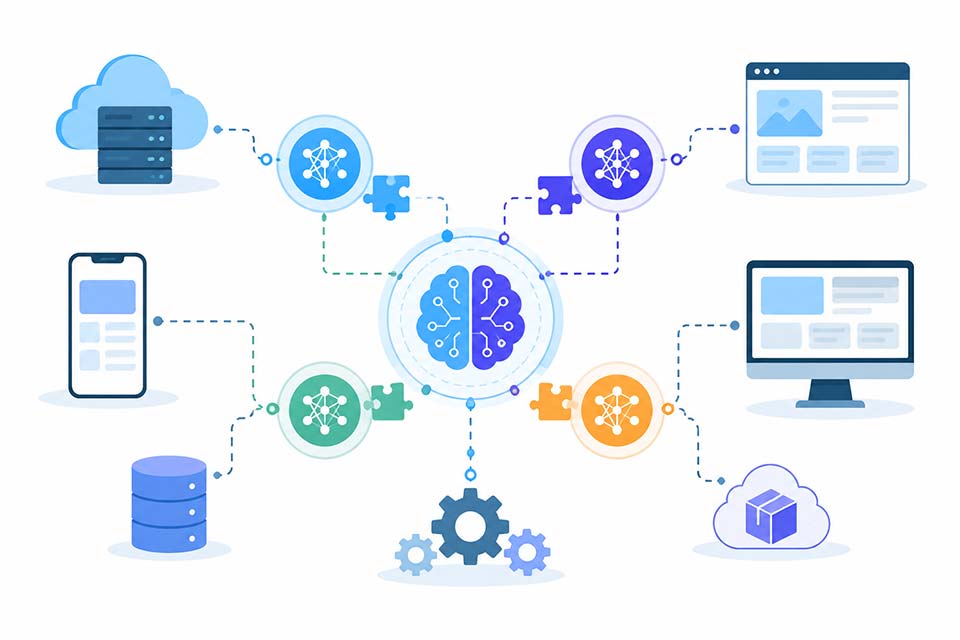

Throughout industries, the uptake of synthetic intelligence is accelerating as extra organizations flip to clever applied sciences to automate operations, enhance decision-making, optimize workflows, and improve buyer experiences. Corporations are embedding AI into virtually each side of their operations, from finance and healthcare to manufacturing, retail, logistics, and enterprise software program. This development has led to the speedy emergence of enterprise AI platforms, specialised fashions, cloud ecosystems, and clever automation environments designed to unravel very particular enterprise challenges.
However with the pace of AI transferring ahead, many organizations are actually dealing with a giant problem: fragmentation. Most corporations have many AI methods that aren’t speaking to one another – scattered throughout departments, distributors, cloud suppliers, and functions. One crew is perhaps utilizing predictive analytics instruments from one vendor, one other is perhaps working generative AI fashions on a distinct cloud atmosphere, whereas operational workflows run on fully completely different automation platforms. These remoted ecosystems create operational silos that restrict scalability, lower effectivity, and make coordination throughout the enterprise tougher.
However as corporations scale their digital operations, it’s changing into more and more troublesome to manage the fragmentation of AI methods. AI environments which might be remoted from one another usually wrestle to speak, creating boundaries between workflows, datasets, operational insights, and decision-making. Vendor closed architectures and proprietary ecosystems prohibit flexibility and make it more durable for organizations to deliver collectively intelligence throughout platforms.
On the similar time, the rising complexity of enterprise operations is driving demand for extra related and collaborative methods of intelligence. In the present day, companies are orchestrating large quantities of knowledge throughout cloud environments, functions, IoT units, buyer platforms, provide chains, and operational methods in real-time. Not can these interactions be managed manually in a scalable method.
However as organizations undertake bigger and extra complicated digital ecosystems, the necessity for AI methods that may talk and orchestrate seamlessly throughout platforms is quick changing into important. Corporations are not desirous about one-trick pony AI instruments that may solely resolve one downside. As an alternative, they need interoperable environments the place clever methods can share info, coordinate workflows, and work collaboratively all through the entire group.
That is pushing interoperability to be the following massive frontier of AI scalability and enterprise transformation. Interoperable AI methods allow clever applied sciences to collaborate throughout platforms, cloud infrastructures, enterprise functions, and operational environments, with out being restricted by siloed architectures. Such related ecosystems permit organizations to unify automation, drive operational visibility, and pace clever decision-making throughout distributed methods.
The rise of interoperable AI methods can also be a pure evolution of enterprise expertise technique. Increasingly more corporations are recognizing that the way forward for AI is just not solely about mannequin efficiency, however how nicely clever methods can collaborate inside bigger digital ecosystems. Standalone instruments should not as efficient as interconnected AI environments in offering enhanced operational agility, accelerated innovation cycles, and extra scalable automation capabilities.
The arrival of recent interoperable AI methods thus adjustments synthetic intelligence from stand-alone functions to interconnected intelligence ecosystems that may allow unified automation, collaborative choice making, and scalable cross-platform innovation. As industries leap into hyper-connected digital infrastructures, organizations that efficiently embed interoperable AI methods into their operations can be higher positioned to scale intelligence, enhance effectivity, and compete in more and more automated financial environments.
Interoperable AI Methods: What Are They?
As organizations ramp up their AI adoption, many are deploying a number of clever applied sciences throughout departments, platforms, and operational environments. However most of those instruments work in silos, creating fragmented ecosystems which might be troublesome to scale and coordinate. This problem is encouraging the event of interoperable AI methods that purpose to attach intelligence throughout functions, infrastructures, and digital workflows.
In the present day’s corporations not use a single AI mannequin or platform, so interoperability is changing into a necessity. As an alternative, they deploy a number of good methods concurrently to automate, analyze, interact clients, optimize operations, safe cybersecurity, and make choices. To be actually enterprise-wide intelligence, these applied sciences want to have the ability to seamlessly speak and work collectively.
Defining interoperable AI
Interoperable AI is AI that may talk with, share info, and work collectively throughout completely different platforms, functions, cloud environments, and operational infrastructures. Interoperable environments permit clever applied sciences to collaborate in a related ecosystem as an alternative of working as standalone instruments.
On the core of interoperable AI methods is one primary trait—the flexibility for fashions, functions, and enterprise infrastructure to go information backwards and forwards effortlessly. These methods can transmit insights, operational alerts, workflows, and predictive intelligence throughout environments with minimal handbook coordination. This permits organizations to mixture intelligence throughout previously siloed platforms.
One other defining function is the cross-platform orchestration. Enterprises are more and more turning to AI methods to automate workflows that span a number of functions and operational layers. Interoperable environments permit good applied sciences to collaborate in process coordination, context sharing, and workflow optimization throughout departments and digital methods on an ongoing foundation.
Unified intelligence throughout enterprise ecosystems improves visibility and decision-making. As an alternative of battling with disjointed snippets of perception from numerous platforms, organizations can construct interconnected environments that embed AI methods inside a bigger, collective intelligence community that helps enterprise-wide automation and coordination.
From Standalone Fashions to Related AI Ecosystems
The emergence of interoperable AI methods is a large shift in enterprise expertise structure. Early AI methods have been usually slim and siloed. Organizations deployed particular person instruments constructed for particular capabilities reminiscent of fraud detection, advice engines, predictive upkeep, or customer support automation. Typically, these standalone methods have been solely appropriate for slim environments with restricted integration capabilities.
Thus, conventional AI environments created operational silos. Completely different enterprise items usually use completely different platforms from completely different distributors with incompatible infrastructures, information buildings, and communication protocols. This made it troublesome for clever methods to work collectively or talk operational insights throughout the enterprise.
Restricted interoperability between distributors and cloud platforms added further complexity to scalability. Many organizations that run a number of AI methods confronted challenges reminiscent of siloed workflows, duplicated information processing, and inconsistent visibility into operations. Utilizing these applied sciences usually concerned pricey customized growth and sophisticated middleware options.
Corporations are transitioning to distributed and collaborative AI ecosystems. As enterprises more and more understand that the way forward for AI is not only the efficiency of particular person fashions, however the skill of clever applied sciences to coordinate in bigger operational environments.
AI methods are the networked operational infrastructure for a number of fashions, functions, and automation platforms to work collectively dynamically. Clever methods are not remoted however are as an alternative constantly speaking with one another to assist decision-making and operational responsiveness throughout the enterprise.
That is very true as corporations transfer to multi-cloud architectures, edge computing environments, IoT ecosystems, and autonomous operational workflows. Interoperability helps organizations to scale intelligence extra successfully throughout extremely distributed digital environments.
Traits of Interoperable AI Methods
Trendy interoperable AI methods exhibit a number of key traits that set them other than conventional remoted AI architectures.
And the platform-agnostic integration is a vital side. Interoperable environments are meant to hyperlink good applied sciences throughout a number of distributors, infrastructures, and cloud suppliers with no vendor lock-in. This flexibility makes it much less depending on proprietary environments and extra scalable.
Standardized communication protocols are one other necessary part. Dependable info alternate throughout platforms requires widespread frameworks and interfaces for AI methods. Clever applied sciences are well-suited to coordination through APIs, information codecs, orchestration layers, and interoperability requirements.
Shared operational intelligence can also be important. Interoperable AI methods allow unified enterprise intelligence environments, relatively than remoted insights in single methods. That’s, operational information, predictions, and workflows are constantly synchronized throughout the enterprise.
Actual-time coordination and synchronization additionally improve responsiveness all through the enterprise. Sensible applied sciences can ship info in real-time, and this permits organizations to robotically change workflows in real-time, responding to operational adjustments extra shortly.
One other attribute is a modular and scalable structure. More and more, corporations need AI methods that may scale throughout departments, functions, and geographies with out re-engineering their total infrastructure. Interoperable AI environments additionally facilitate modular approaches to deployment, which allow organizations to slowly combine new capabilities.
Collectively, these traits create versatile and adaptive digital ecosystems to assist enterprise intelligence at scale.
Forms of AI Interoperability
In enterprise ecosystems, interoperability may be current at many various operational layers.
Mannequin-to-model interoperability permits completely different AI methods to work collectively straight. Predictive analytics fashions could share info with generative AI methods or automation engines to enhance coordination of workflows and operational decision-making.
As organizations embrace hybrid and multi-cloud infrastructure methods, cloud-to-cloud AI integration is gaining significance. Corporations continuously run AI workloads throughout completely different cloud suppliers, so cross-cloud communication is important to operational continuity.
Cross-application intelligence sharing permits AI methods embedded in numerous enterprise functions to share operational information and insights. Related intelligence layers can higher orchestrate buyer relationship administration platforms, provide chain methods, monetary functions, and analytics environments.
One other rising space of interoperability is AI agent collaboration methods. Autonomous AI brokers can coordinate duties, alternate contextual info, and collaboratively execute workflows with out the fixed want for human intervention. This skill is changing into ever extra vital in automation-rich enterprise settings.
Enterprise-wide AI orchestration combines completely different ranges of interoperability into seamless operational ecosystems. An orchestration framework is utilized by organizations to coordinate workflows, synchronize information, handle clever automation, and optimize enterprise operations throughout related digital infrastructure.
These interoperability mechanisms will develop into more and more important as enterprise expertise environments proceed to develop, enabling scalable AI adoption and clever operational coordination.
Key Perception
Interoperable AI methods permit clever applied sciences to work collectively throughout platforms, functions, and operational environments, creating related ecosystems relatively than remoted AI instruments. Interoperable AI methods are constructing the muse for extra scalable, adaptive, and collaborative digital enterprises by permitting for seamless communication, shared intelligence, and coordinated automation.
Key constructing blocks for interoperable AI
Constructing interoperable AI environments requires a number of foundational applied sciences to work in live performance to allow communication, coordination, and intelligence sharing throughout platforms. As enterprises embrace extra distributed digital ecosystems, organizations want AI methods that may run throughout functions, cloud infrastructures, workflows, and operational environments.
Interoperable ecosystems are extra than simply connecting software program functions. Companies must construct widespread infrastructure, orchestration frameworks, communication requirements, governance insurance policies, and scalable integration layers that permit clever applied sciences to collaborate continuously. These core components are the operational base for contemporary AI systems to operate as interconnected intelligence networks relatively than stand-alone instruments.
1. APIs and Integration Frameworks
APIs and integration frameworks are the spine of interoperable AI environments. AI methods can not alternate info throughout platforms and operational workflows successfully with out standardized communication layers.
AI communication through APIs means good applied sciences can converse in real-time with operational alerts, predictive insights, workflow information, and automation instructions. These APIs permit functions, cloud providers, machine studying fashions, and enterprise platforms to speak to one another with out handbook orchestrations.
As well as, middleware and orchestration platforms present an extra layer of coordination between distributed AI methods, making integration even simpler. Such platforms assist with information routing, workflow synchronization, and administration of interactions between a number of operational environments on the similar time.
Standardized integration layers are significantly related for enterprises that function throughout completely different infrastructures. Typically, a corporation may have a number of vendor AI methods working throughout a number of cloud suppliers and operational contexts. Integration requirements permit these methods to speak to one another in a constant method, with out requiring extremely custom-made infrastructure for each implementation.
APIs and orchestration frameworks will proceed to be important enablers of scalable, related AI operations as enterprise ecosystems evolve.
2. Shared Information Infrastructure
Shared information infrastructure is without doubt one of the most crucial parts of interoperable AI environments. Information is the bedrock of each clever system. AI methods want entry to correct, synchronized, and accessible info to facilitate collaboration throughout workflows and operational ecosystems.
Unified information environments allow organizations to deliver collectively operational intelligence throughout platforms. Companies can create related ecosystems the place AI methods can continuously draw from shared info as an alternative of maintaining fragmented datasets in remoted functions.
Actual-time information synchronization is important to operational responsiveness. Interoperability environments depend on info that’s continuously being up to date and flowing throughout platforms, cloud methods, and enterprise functions. To work in concord, AI methods want operational information to be aligned throughout the ecosystem.
Information accessibility throughout platforms additionally improves scalability and decision-making. Organizations are more and more adopting hybrid cloud environments, SaaS platforms, IoT infrastructure, and distributed enterprise methods. Clever applied sciences have entry to operational insights wherever the info is generated via shared information environments.
Shared infrastructure additionally reduces duplication, will increase forecast accuracy, and will increase enterprise-wide visibility. Companies can higher coordinate operations when information isn’t caught in silos however as an alternative flows constantly between related AI methods.
3. AI Fashions Orchestration Methods
As enterprises deploy extra clever applied sciences, orchestration methods have gotten important for coordinating the simultaneous operation of a number of AI methods.
AI mannequin orchestration platforms assist enterprises handle workflows for predictive analytics fashions, generative AI instruments, advice engines, automation methods, and operational intelligence platforms. These good applied sciences should not working in isolation, however relatively in live performance via centralized orchestration environments.
Managing a number of AI fashions is very necessary for complicated enterprise operations that depend upon completely different methods to contribute to shared workflows. Customer support environments may be conversational AI, advice methods, fraud detection instruments, and operational analytics all on the similar time.
Workflow routing and process distribution enhance effectivity by dynamically allocating duties to essentially the most appropriate clever methods. AI methods can collaborate on info and may optimize the real-time operation of workflows.
AI-agent collaboration frameworks are one other rising orchestration space. More and more, ever extra highly effective autonomous AI brokers are capable of talk straight with one another to coordinate duties, alternate contextual info, and execute workflows constantly with out human involvement. These orchestration capabilities are serving to enterprises transfer within the path of extra adaptive and autonomous digital ecosystems.
4. Open Protocols and Open Requirements
Interoperability is principally based mostly on widespread requirements and communication protocols, which permit completely different distributors and infrastructure methods to interoperate effectively.
Interoperability requirements deliver consistency throughout distributed ecosystems. With out widespread frameworks, organizations face integration complexity and operational fragmentation as they deploy AI methods throughout a number of platforms.
Free switch of data between functions, cloud environments, and good applied sciences requires commonplace communication codecs. Standardized APIs, metadata buildings, and messaging protocols reduce down operational friction and make it simpler to combine with enterprises.
Open-source AI frameworks are additionally driving the adoption of interoperability throughout industries. Open ecosystems foster collaboration, scale back reliance on proprietary infrastructure, and allow better innovation throughout enterprise expertise environments. As enterprises construct out distributed digital operations, open requirements can be an more and more necessary consider enabling scalable cross-platform intelligence coordination.
5. Cloud and Edge Computing Integration
Trendy AI environments are more and more deployed throughout distributed cloud and edge infrastructure. Scalable computing is made potential with cloud platforms, and real-time processing is made possible with edge environments in proximity to the operational exercise.
Distributed AI infrastructure permits organizations to deploy AI methods throughout a number of operational layers whereas sustaining related intelligence environments. Cloud methods supply centralized scalability, whereas edge environments supply higher responsiveness and decrease latency.
Edge-to-cloud coordination is changing into particularly necessary in industries reminiscent of healthcare, manufacturing, logistics, transportation, and good infrastructure. Ongoing sharing of operational insights with centralized cloud environments is widespread for Edge AI methods.
Distributed coordination of this sort is vital for real-time operational intelligence. Companies are in search of AI methods which might be able to analyzing dwell information streams in geographically dispersed environments with out the latency that outcomes from siloed infrastructure. As enterprise operations develop into extra distributed, cloud and edge integration will proceed to be a key component of interoperable AI ecosystems.
Additionally Learn: AIThority Interview With Rohit Agarwal, Founder & CEO of Portkey
6. Safety and Governance Layers
As AI methods develop into extra networked, safety and governance have gotten extra necessary. In interoperable environments, weak governance frameworks improve organizations’ susceptibility to cybersecurity threats, unauthorized entry, and operational disruptions when information alternate between platforms happens.
Id and entry administration methods assist in guaranteeing safe authentication and managed entry throughout distributed AI environments. With related ecosystems, organizations must fastidiously handle person roles, system-level interactions, and permissions.
AI governance insurance policies are additionally essential for transparency, compliance, accountability, and moral oversight. Companies want frameworks that outline how AI methods will entry information, make coordinated choices, and work autonomously throughout workflows.
Operational integrity is additional protected by safe cross-platform communication. Encryption, safe APIs, authentication protocols, and monitoring methods might help organizations preserve belief and resilience in related intelligence environments.
As AI ecosystems develop into extra autonomous and interconnected, governance and safety infrastructure can be important to allow scalable and reliable operations.
Strategic Perspective
To be interoperable, AI wants shared infrastructure, open integration frameworks, orchestration methods, and safe communication requirements. These organizations that may efficiently marry APIs, shared information environments, orchestration platforms, cloud integration, and governance frameworks can be in a greater place to construct scalable AI methods that may assist related, clever, and constantly adaptive enterprise ecosystems.
Interoperable AI Methods Use Instances
With enterprises embracing related digital infrastructure, interoperable AI environments are important for operational scalability and clever automation. The times when companies deploy standalone instruments for particular person capabilities are lengthy gone. As an alternative, they depend upon AI methods that may coordinate workflows, share intelligence, and work collectively throughout departments, functions, and clouds.
Interoperability permits organizations to construct interconnected ecosystems of automation, analytics, and operational intelligence that run 24×7 throughout the enterprise. These capabilities are reworking industries via elevated effectivity, pace, and at-scale decision-making.
1. Enterprise Course of Automation
One of the crucial necessary use circumstances of interoperable AI methods is workflow automation in enterprises. In large-scale operations, organizations are challenged with simultaneous extremely complicated environments together with finance, customer support, logistics, human sources, provide chains, cybersecurity, and operational administration.
Enterprise course of automation. AI-based enterprise course of automation methods assist organizations automate processes throughout numerous departments and digital platforms. Clever applied sciences can collaborate in built-in automation environments the place info is continually shared and actions are coordinated, relatively than utilizing remoted instruments.
Cross-functional course of automation boosts operational effectivity by eradicating the necessity for handbook coordination between departments. As an example, buyer onboarding workflows may embrace id verification methods, cost processing platforms, CRM functions, compliance engines, and assist automation instruments, all working on interoperable infrastructure.
Clever process orchestration enhances enterprise automation by dynamically routing workflows to the appropriate methods based mostly on operational circumstances and enterprise priorities. This permits corporations to increase their operations extra effectively, whereas rising responsiveness and lowering administrative complexity.
2. Healthcare and Medical Intelligence
One other massive sector to achieve from interoperable AI methods is healthcare. Trendy healthcare methods generate huge portions of operational and scientific information throughout hospitals, laboratories, diagnostics platforms, affected person administration methods, and wearable applied sciences.
Interoperating diagnostic methods allow healthcare suppliers to synchronize intelligence throughout imaging platforms, predictive analytics instruments, affected person monitoring units, and therapy planning environments. AI methods can collaborate to investigate affected person information to reinforce diagnostic accuracy and scientific decision-making.
Unified affected person intelligence environments permit suppliers to ship a extra full, related healthcare expertise. Quite than counting on disparate information throughout establishments and functions, healthcare organizations can synchronize affected person information throughout methods in actual time.
Cross-platform healthcare analytics additional improve operational visibility and therapy coordination. AI methods can analyze developments throughout distributed networks of healthcare methods associated to affected person outcomes, useful resource utilization, illness forecasting, and operational efficiency. As healthcare ecosystems develop into extra digital and data-driven, interoperability can be extra important than ever to enhancing care supply and operational effectivity.
3. Monetary Companies and Banking
Monetary establishments are very data-intensive, and the flexibility to coordinate and analyze threat in actual time is important. Interoperable AI methods allow banks and monetary organizations to reinforce operational intelligence throughout transactions, compliance, cybersecurity, fraud prevention, and buyer engagement.
AI-powered fraud detection networks can allow clever methods to share info between cost platforms, transaction monitoring methods, and cybersecurity infrastructure. This permits organizations to detect suspicious exercise quicker and enhance their fraud prevention capabilities.
Cross-platform threat evaluation additionally enhances monetary decision-making by linking operational intelligence throughout lending methods, funding platforms, buyer analytics instruments, and compliance environments. “With all this synchronized info from a number of layers of operation, AI methods can assess threat on an ongoing foundation.
Sensible monetary operations additionally deliver better automation to areas reminiscent of customer support, portfolio administration, underwriting, and regulatory reporting. Related AI environments permit monetary establishments to modernize workflows and increase responsiveness throughout complicated operational ecosystems.
As digital operations proceed to proliferate inside monetary providers throughout the globe, interoperable infrastructure can be an necessary enabler to scalable and resilient clever operations.
4. Provide Chain and Logistics Coordination
Provide chains are more and more counting on interoperable AI methods to coordinate actions throughout suppliers, transportation networks, stock methods, warehouses, and success environments. Related stock forecasting methods help organizations in aligning operational intelligence throughout retail platforms, logistics functions, manufacturing environments, and distribution facilities. AI methods can predict demand in real-time and optimize stock allocation accordingly.
AI-powered logistics optimization drives transportation effectivity by continuously coordinating cargo routing, warehouse operations, supply scheduling, and fleet administration throughout distributed infrastructure.
Autonomous provide chain orchestration takes scalability one step additional, with clever methods that robotically reply to operational disruptions, demand adjustments, and logistics circumstances. Coordinated predictive intelligence environments can improve resilience and scale back delays for companies. In an period of more and more complicated world provide chains, interoperability can be key to sustaining operational continuity and reaching real-time visibility.
5. Sensible Manufacturing and Industrial Operations
Manufacturing environments are shortly changing into related industrial ecosystems powered by interoperable AI methods. Smart factories more and more deploy clever applied sciences that work concurrently throughout manufacturing traces, robotics platforms, upkeep methods, and provide chain infrastructure.
AI-coordinated manufacturing methods allow producers to synchronize workflows throughout gear, workforce scheduling, stock administration, and operational planning environments. Sensible coordination boosts productiveness and reduces downtime and inefficiencies.
Predictive upkeep ecosystems additional enhance operational reliability by enabling AI methods to constantly analyze gear efficiency throughout amenities and operational infrastructure. Companies can spot mechanical dangers earlier than they trigger failures and optimize upkeep schedules proactively. Related operational ecosystems additionally permit for industrial automation intelligence to enhance useful resource allocation, vitality administration, manufacturing forecasting, and high quality management. As Trade 4.0 adoption hurries up, interoperability would be the basis of autonomous and scalable industrial operations.
6. Buyer Expertise and Customization
Buyer expertise platforms are relying increasingly more on interoperable AI methods to ship personalised and related engagement throughout digital channels.
Unified buyer intelligence platforms assist companies unify buyer information throughout CRM, ecommerce, assist, analytics, and advertising and marketing environments. This gives a broader perspective on buyer habits and engagement patterns. Cross-channel personalization can improve buyer experiences by enabling AI methods to harmonize messaging, suggestions, assist interactions, and promotions seamlessly throughout channels.
AI-powered engagement orchestration goes a step additional in responsiveness, enabling clever methods to adapt interactions on the fly based mostly on buyer habits and operational context in actual time. Organizations with interoperable buyer intelligence environments can increase loyalty, retention, and conversion efficiency via extra related and personalised engagement methods.
7. Authorities and Sensible Infrastructure
Governments and public infrastructure networks are additionally deploying interoperable AI methods to enhance operational effectivity and public service coordination.
Linked to public service, AI methods allow businesses to coordinate intelligence sharing throughout transportation, emergency response, healthcare, utilities, and administrative operations. Shared operational visibility for higher decision-making and repair supply.
The power to interoperate is crucial for the dynamic coordination of visitors administration, public transit methods, autonomous mobility providers, and infrastructure monitoring platforms in clever transportation networks.
Sensible metropolis operational ecosystems lengthen these capabilities by linking vitality methods, environmental monitoring, public security infrastructure, and concrete planning platforms via unified intelligence environments. As cities develop into more and more digitized, interoperable AI methods can be on the coronary heart of extra responsive, scalable, and sustainable city operations.
Key Message
With interoperability, AI methods can join intelligence throughout operations to create scalable and coordinated digital ecosystems. Interoperable AI methods are making industries extra versatile, smarter, and at all times related with one another by enabling seamless communication, orchestration of workflows, and shared visibility into operations.
Benefits of interoperable AI
As organizations scale digital transformation initiatives, interoperability is changing into a foundational requirement for scalable and clever operations. More and more, organizations are deploying a number of AI methods throughout cloud platforms, enterprise functions, operational workflows, and distributed infrastructure. With out interoperability, these good applied sciences usually stay in silos, limiting coordination and automation throughout the enterprise.
Interoperable environments allow organizations to attach intelligence throughout methods, offering seamless communication, workflow orchestration, and real-time collaboration between digital platforms. The connectivity affords appreciable enterprise advantages when it comes to effectivity, scalability, innovation, and operational responsiveness.
1. Improved Operational Effectivity
One of many first advantages of interoperable AI methods is elevated operational effectivity. Many organizations face the problem of duplicated processes, disconnected automation environments, and fragmented operational workflows throughout a number of platforms.
Decreasing redundancy between AI methods helps companies reduce out redundant information processing and overlapping automation duties. Related intelligence environments permit organizations to share operational insights throughout functions as an alternative of duplicating the identical capabilities in disparate instruments.
Streamlined workflows and automation increase productiveness by permitting good applied sciences to orchestrate duties throughout departments and operational layers in a steady style. When AI methods are capable of interchange info seamlessly, companies are capable of automate end-to-end workflows higher.
One other massive benefit is the pace of executing processes. Interoperable ecosystems take away delays of disjointed infrastructure and handbook coordination. Related automation environments allow operational duties reminiscent of forecasting, buyer assist, compliance monitoring, logistics planning, and analytics processing to be carried out extra effectively. As enterprise operations develop into extra data-intensive, interoperability can be important to unlock scalable operational effectivity.
2. Improved Scalability
Scalability is quickly rising as one of many prime strategic initiatives for organizations deploying clever applied sciences in distributed environments. Interoperable AI methods imply scalability — companies can scale clever capabilities with out having to repeatedly redesign infrastructure.
Corporations can lengthen their AI capabilities extra simply to deploy clever applied sciences extra effectively throughout new departments, areas, workflows, and cloud environments. Organizations can add extra AI methods to current ecosystems with out disrupting the circulate of operations.
Modular and reusable AI infrastructure helps scalability even additional. As an alternative of constructing separate methods for every operational use case, companies can reuse predictive fashions, automation engines, analytics instruments, and orchestration frameworks throughout a number of workflows.
The pliability to deploy throughout the enterprise is very necessary in right this moment’s hybrid and multi-cloud environments. More and more, organizations are working throughout distributed digital ecosystems the place functions and infrastructure are unfold throughout a number of suppliers and geographic areas. Interoperability permits AI methods to scale throughout these environments whereas maintaining coordination and synchronization.
This flexibility permits enterprises to constantly adapt to altering operational wants and the emergence of recent applied sciences.
3. Improved Choice Intelligence
Trendy corporations want real-time intelligence to assist strategic planning and operational responsiveness. AI methods’ interoperability enhances decision-making by giving a holistic view of distributed workflows, functions, and infrastructure.
Unified operational visibility means organizations can entry synchronized intelligence throughout the enterprise, not fragmented insights from remoted methods. Companies achieve higher visibility into operational circumstances, buyer habits, market exercise, and workflow efficiency.
Predictive insights via methods additionally improve forecasting accuracy and strategic planning. AI methods that operate throughout departments can share operational information and predictive analytics on an ongoing foundation, enabling organizations to higher determine developments, dangers and alternatives.
One other main benefit is strategic responsiveness in actual time. In interoperable environments, intelligence is constantly flowing throughout related methods, permitting companies to reply quicker to operational disruptions, altering buyer habits, market fluctuations, and rising dangers.
As organizations more and more depend on predictive analytics and clever automation instruments, interoperability can be important to preserving agile and knowledgeable decision-making environments.
4. Elevated Innovation and Collaboration
Interoperability additionally accelerates innovation in enterprises by selling extra collaborative and related digital ecosystems.
Organizations can experiment with AI quicker by decreasing the boundaries to integrating and experimenting with new clever applied sciences in current infrastructure. Interoperable environments scale back integration boundaries and operational friction, permitting companies to roll out new capabilities quicker.
That shared intelligence between groups solely enhances the collaboration between departments. Synthetic intelligence methods can unfold insights throughout finance, operations, advertising and marketing, logistics, cybersecurity, buyer assist, and product growth environments without delay.
Collaborative AI ecosystems permit organizations to combine specialised clever applied sciences into broader operational methods. For instance, predictive analytics fashions may work along with generative AI instruments, workflow automation methods, and buyer intelligence platforms to allow extra refined enterprise operations. This interconnected method promotes steady innovation, as corporations can construct adaptive ecosystems, not remoted expertise stacks.
5. Much less Vendor Lock-In
Vendor lock-in is an rising concern for enterprises in fast-evolving expertise environments. Many organizations need extra selection of their cloud suppliers, enterprise platforms, and clever applied sciences. As a result of companies should not locked right into a single vendor ecosystem, interoperable AI methods make it simpler to implement versatile infrastructure methods. Organizations can use instruments from completely different distributors with out dropping operational continuity.
One other massive plus is the flexibility to maneuver between platforms with extra ease. Enterprises supported by clever applied sciences, which permit standardized communication and integration frameworks, can adapt infrastructure extra effectively.
Multi-vendor AI-coordination improves scalability and resilience. As an alternative of counting on proprietary ecosystems with restricted interoperability, organizations can leverage best-of-breed applied sciences from completely different suppliers. As enterprise AI adoption continues to develop, flexibility will develop into a rising requirement for long-term operational scalability and innovation.
6. Expedited Autonomous Operations
Interoperability can also be fueling the emergence of autonomous enterprise operations, the place clever applied sciences are continuously coordinating workflows with little human intervention. So, with AI methods working workflows constantly, companies can dynamically automate complicated operational processes throughout departments and functions. Related ecosystems improve responsiveness and decrease dependence on handbook coordination.
Clever coordination removes handbook intervention, bettering operational effectivity much more. AI methods can share info, divide work, speed up processes, and alter operational ways in actual time in distributed environments.
One of the crucial necessary long-term advantages of interoperability is adaptive operational ecosystems. Companies can create environments the place automation methods dynamically adapt to operational circumstances, predictive insights, and workflow efficiency. As organizations evolve to autonomous enterprise fashions, interoperable infrastructure can be important to allow scalable clever coordination.
Most important perception
Interoperable AI permits better scalability, effectivity, flexibility, and coordination of intelligence throughout the enterprise. AI methods are interoperable, supporting shared operational intelligence and related automation environments that assist organizations construct extra adaptive, scalable, and clever digital ecosystems.
Challenges for interoperability of AI methods
Interoperability is a giant win, however constructing related intelligence ecosystems additionally comes with main operational, technical, and governance challenges. Organizations face the problem of balancing scalability, openness, safety, and coordination in integrating AI methods throughout distributed environments.
1. No Standardization
A serious impediment for interoperable AI methods is the absence of widespread requirements throughout platforms and distributors. Sadly, AI protocols and architectures are fragmented, and integration turns into troublesome as organizations deploy applied sciences on incompatible infrastructures and communication frameworks. Interoperability may be restricted by proprietary APIs, information codecs, and orchestration environments utilized by completely different distributors.
Deployment is additional difficult by inconsistent integration frameworks. Corporations usually have to do a ton of configuration and develop customized middleware to get distributed AI methods to speak to one another nicely.
Vendor-specific ecosystems also can create operational silos that restrict scalability and adaptability. If methods are designed for closed proprietary environments, it may be troublesome to coordinate workflows.
2. Information Compatibility and High quality Points
One other massive problem for related intelligence ecosystems is information interoperability. Variations in information buildings throughout platforms can prohibit synchronization and coordination of operations. The best way an AI system processes info will usually depend upon the structure of the applying and the context through which it’s working.
As organizations scale throughout a number of cloud suppliers, geographies, and distributed operational environments, synchronization challenges develop into extra complicated. Refined infrastructure administration is required for constant real-time intelligence throughout ecosystems.
In interoperable environments, the complexity of knowledge governance is even better. Among the key challenges for companies are information possession, accessibility, high quality management, retention insurance policies, and compliance throughout interconnected methods.
3. Safety and Privateness Dangers
Clever applied sciences in interoperable ecosystems share operational info throughout platforms and infrastructure in actual time, rising assault surfaces. Sturdy safety controls are required to mitigate cybersecurity dangers from cross-platform vulnerability publicity. Compromised methods in a single atmosphere can impression related workflows within the enterprise.
Due to this fact, the necessities for safe AI communication are important. Companies have to implement encryption, authentication protocols, entry controls, and monitoring methods to guard the integrity of operations.
Compliance and regulatory points add complexity to interoperability efforts. For corporations that function in a number of areas, AI methods should adjust to information privateness legal guidelines, cybersecurity necessities, and {industry} governance requirements.
4. Governance and Accountability
As AI methods develop into extra autonomous and interconnected, the governance challenges develop into extra complicated. When autonomous AI interacts with one another, there must be clear operations oversight and accountability buildings. Companies want to look at how clever applied sciences are orchestrating choices and dealing throughout distributed ecosystems.
Getting a deal with on distributed methods is tough sufficient while you’re juggling a number of distributors, cloud environments, automation platforms, and autonomous workflows all of sudden.
There are additionally rising moral AI coordination challenges. Related methods have to be clear, accountable, and truthful of their operation and should keep away from unintended bias or operational hurt.
5. Infrastructure Complexity
Managing infrastructure in large-scale interoperable ecosystems is extraordinarily complicated. Meaning continuously juggling AI functions, cloud infrastructure, APIs, orchestration frameworks, information environments, and automation methods at scale.
If companies don’t have standardized structure and governance frameworks, integration overhead can develop into pricey and operationally difficult. Efficiency scaling and optimization develop into tougher with bigger and extra distributed clever ecosystems.
6. Obstacles: Group and Tradition
It takes greater than expertise for interoperability adoption to achieve success. Organizational construction and tradition matter rather a lot, too. Groups accustomed to working in silos and having their very own workflows could resist open AI ecosystems.
Siloed operational buildings additionally hinder collaboration between the departments liable for completely different functions and infrastructure environments. Due to this fact, the necessity for cross-functional collaboration is changing into extra necessary. For companies to efficiently deploy interoperable AI methods, they have to align methods in expertise, operations, governance, cybersecurity, and management.
Key Takeaway
Interoperable AI methods indicate a trade-off between openness, safety, governance, scalability, and operational complexity. Organizations that deal with these challenges can be higher positioned to create related intelligence ecosystems that allow scalable automation, collaborative decision-making, and adaptive operations within the enterprise.
Future Developments in Interoperable AI
The speedy growth of interoperable AI is reworking the best way organizations construct, handle, and scale clever operations. With companies more and more constructing out digital ecosystems throughout cloud infrastructure, automation platforms, edge computing environments, and related functions, interoperability is changing into a cornerstone of next-generation enterprise intelligence.
Future AI ecosystems gained’t be based mostly on remoted functions that work in isolation. As an alternative, organizations will more and more deploy AI methods that may collaborate autonomously throughout platforms, workflows, units, and industries. The way forward for enterprise automation and digital transformation can be characterised by clever coordination, real-time communication, and distributed operational intelligence.
1. AI-to-AI Collaboration Networks
One of the crucial revolutionary developments in interoperable intelligence is the emergence of AI-to-AI collaboration networks. In these environments, AI methods will be capable of converse with one another, share details about operations, coordinate workflows, and make joint choices with out fixed human oversight.
Autonomous AI brokers speaking straight to one another will massively scale enterprise responsiveness and operations. Clever methods will negotiate duties dynamically, allocate sources, and synchronize actions in distributed environments as an alternative of relying on centralized handbook coordination.
Distributed intelligence ecosystems will allow organizations to deploy specialised AI methods throughout completely different departments and operational ranges, but nonetheless preserve steady communication between them. Related intelligence networks will tackle better integration of customer support automation, provide chain forecasting, predictive upkeep, cybersecurity monitoring, and operational analytics platforms in actual time.
Collaborative machine decision-making will strengthen the automation of enterprises. AI methods will share a steady evaluation of the operational atmosphere, consider dangers, optimize workflows, and coordinate strategic actions throughout digital ecosystems.
When the skills of AI-to-AI communications are extra developed, corporations can be nearer to extremely adaptive operational environments which might be potential due to interconnected machine intelligence.
2. Open AI Ecosystems and Requirements
The long run development of interoperable intelligence may also depend upon the growth of open AI ecosystems and standardized communication frameworks. We anticipate industry-wide interoperability frameworks to develop into more and more necessary as organizations search for scalable methods to combine distributed AI methods throughout platforms and cloud suppliers. Frequent requirements will decrease operational friction and ease cross-platform coordination.
Open-source orchestration platforms will additional increase innovation by enabling enterprises to construct collaborative and versatile AI environments with out relying solely on proprietary infrastructure. The enterprise world is more and more transferring in the direction of versatile ecosystems that permit integration throughout a number of distributors and operational environments.
Standardized AI communication protocols can be important for the seamless alternate of data between clever applied sciences. Frequent information fashions, APIs, interoperability layers, and common messaging frameworks will permit us to coordinate AI methods extra successfully throughout distributed infrastructure.
Open ecosystems will develop, and this may also drive extra collaboration between enterprises, builders, expertise suppliers, and analysis communities. This transfer is predicted to speed up the adoption of interoperability throughout completely different industries globally. As enterprise AI environments proceed to increase, open requirements would be the basis for scalable and related intelligence ecosystems.
3. Multi-Mannequin and Multi-Agent AI Methods
Future interoperable environments will more and more depend upon multi-model and multi-agent AI methods, capable of coordinate specialised intelligence over workflows and operational domains.
By coordinating specialist AI fashions, organizations will be capable of weave predictive analytics, generative AI, advice engines, automation methods, laptop imaginative and prescient, and operational intelligence into unified ecosystems. Corporations will deploy networks of specialised AI methods optimized for various operational capabilities, relatively than a single, generalized mannequin.
Distributed AI reasoning environments will additional improve scalability and decision-making. Clever applied sciences that cross departments and infrastructure layers will use shared contextual intelligence to work collectively to unravel complicated operational issues on a regular basis.
And there can be extra refined clever sharing of workloads. AI methods will allocate duties dynamically between operational environments based mostly on system availability, processing capability, workflow wants, and enterprise priorities.
These distributed architectures will improve operational resilience and permit organisations to course of better volumes of real-time info extra successfully throughout world digital ecosystems. As enterprise operations develop into extra complicated, multi-agent AI methods can be core to clever automation methods.
4. Edge-to-Cloud AI Coordination
The rise of edge computing can also be altering the way forward for interoperable AI methods. Companies are extra distributed than ever earlier than, and operational intelligence is now wanted to run constantly throughout cloud environments, IoT units, industrial methods, and localized edge networks.
Manufacturing, logistics, healthcare, transportation, retail, and good infrastructure industries will want real-time distributed intelligence to reply operationally within the second.
Related edge computing ecosystems allow AI methods to course of info nearer to operational exercise, whereas nonetheless synchronizing with centralized cloud infrastructure. This enhances pace, reduces latency, and will increase real-time operational visibility.
This can allow autonomous workflows additional throughout geographically distributed ecosystems with AI working seamlessly throughout environments. Sensible methods will be capable of share operational insights seamlessly throughout edge units, enterprise platforms, and cloud environments to make sure constant decision-making.
For instance, predictive upkeep methods put in on manufacturing unit gear could possibly be continuously sending information to cloud analytics platforms and logistics apps to optimize how operations are coordinated on the fly. As extra organizations deploy IoT infrastructure and distributed digital methods, edge-to-cloud interoperability will develop into more and more necessary for scalable enterprise intelligence.
5. Autonomous Enterprise Operations
Interoperability has additional accelerated the transfer to autonomous enterprise operations the place AI methods are managing workflows, useful resource optimization, and operational processes on an ongoing foundation with little human intervention.
Self-optimizing AI workflows will allow enterprises to dynamically adapt in actual time to operational adjustments, buyer habits, market circumstances, and infrastructure efficiency. Clever methods will constantly optimize workflows via predictive analytics and suggestions loops.
Clever operational ecosystems will facilitate automated, simultaneous coordination throughout finance, provide chains, workforce, cybersecurity, logistics, customer support, and infrastructure operations.
With organizations seeking to run extremely distributed world operations extra effectively, enterprise coordination powered by AI at scale will develop into extra necessary. AI methods will help corporations within the steady orchestration of workflows throughout departments, areas, cloud environments, and digital platforms.
This transfer towards autonomous operations will significantly scale back the necessity for human coordination whereas rising scalability, effectivity, and operational agility throughout industries. As interoperability capabilities proceed to mature, autonomous enterprise ecosystems will develop into a defining function of next-generation digital operations.
6. Convergence of AI, IoT, and Automation
The confluence of AI, IoT infrastructure, robotics, automation platforms, and related enterprise applied sciences may also outline the way forward for interoperable intelligence. Related clever infrastructure permits organizations to attach operational intelligence throughout units, functions, machines, sensors, and enterprise methods in actual time. AI methods will evolve as orchestration layers that join distributed operational ecosystems.
Clever applied sciences can be embedded in manufacturing amenities, transportation networks, healthcare methods, good cities, retail operations, and industrial infrastructure, constructing good operational environments for various industries. Enterprises will be capable of develop constantly adaptive operational environments powered by synchronized intelligence throughout all enterprise capabilities in absolutely built-in digital ecosystems.
As an example, real-time interoperable AI methods can coordinate manufacturing methods, provide chains, predictive upkeep platforms, workforce scheduling, vitality administration, and logistics infrastructure in good factories. This convergence will change the best way enterprises work, creating extremely built-in, always-optimized digital ecosystems inside organizations.
The way forward for AI can be constructed on related, collaborative, and interoperable intelligence methods that may coordinate autonomously throughout platforms and industries. Organizations that use interoperable AI methods of their operations will profit significantly when it comes to scalability, automation, operational agility, and clever decision-making.
Conclusion: From Remoted Instruments to Interconnected Intelligence Methods
The explosive development of enterprise AI adoption has revealed each the massive potential and the constraints of fragmented intelligence environments. For years, organizations carried out siloed AI options for particular use circumstances reminiscent of analytics, automation, forecasting, buyer engagement, or operational optimization. These methods delivered worth individually, however disconnected architectures created operational silos that hindered scalability, collaboration, and intelligence coordination throughout the enterprise.
With digital ecosystems changing into extra complicated by the minute, companies can not afford to depend on remoted applied sciences that work in silos. In the present day’s enterprises require AI methods that may talk, coordinate, and share intelligence seamlessly throughout functions, infrastructure, cloud environments, and operational workflows. This rising want for related intelligence is inserting interoperability excessive on the agenda of priorities shaping the way forward for enterprise expertise.
Interoperable AI environments allow organizations to hyperlink operations, enhance workflow automation, and improve strategic agility throughout distributed digital ecosystems. With the appearance of APIs, orchestration platforms, shared information infrastructure, and standardized communication frameworks, AI methods are not standalone instruments however relatively are working collectively dynamically.
This shift is basically altering how enterprises take into consideration automation and operational intelligence. Increasingly more, AI methods operate as collaborative layers that may constantly coordinate workflows, optimize choices, and synchronize info throughout platforms and departments. Companies are transitioning to ecosystems of related and autonomous intelligence, the place machine-driven coordination permits real-time operational flexibility.
The following few years will see this transformation proceed to speed up with the emergence of AI-to-AI collaboration networks, edge-to-cloud orchestration, multi-agent intelligence methods, and autonomous enterprise operations. As organizations scale AI adoption throughout world operations, distributed infrastructure, IoT ecosystems, and clever automation environments, interoperable infrastructure will develop into more and more important.
On the similar time, enterprises have to fastidiously deal with challenges reminiscent of governance, safety, information interoperability, infrastructure complexity, and organizational alignment. The event of interoperable AI methods have to be guided by a wholesome stability between openness, scalability, resilience, and operational management in a extremely related digital atmosphere.
Interoperable AI methods are reworking synthetic intelligence from remoted functions to interconnected intelligence networks for scalable automation, collaborative decision-making, and constantly adaptive digital operations throughout platforms and industries. The way forward for enterprise AI is not going to be concerning the efficiency of particular person fashions, however about how clever methods can collaborate inside related operational ecosystems that allow real-time coordination, enterprise-wide visibility, and autonomous innovation at scale.
Additionally Learn: AI-Pushed Threat Intelligence: How FIs Are Predicting Systemic Shocks
[To share your insights with us, please write to psen@itechseries.com]
